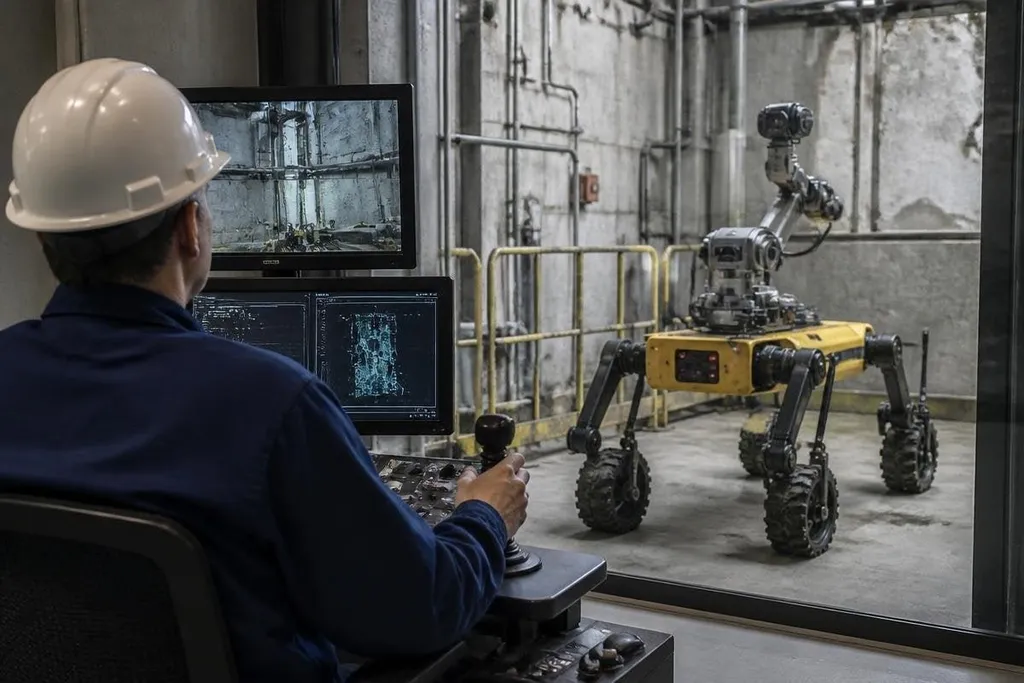
A nuclear robot may work behind thick shielding, inside a damaged plant, or across a site where people cannot stay for long. AI changes how that robot reads its surroundings, chooses a route, and sorts inspection data, but it doesn't remove the need for trained operators.
Quick read
- AI can sort camera, radiation, and thermal readings as a robot moves.
- Human approval still matters for actions that affect safety or plant equipment.
- The useful test is repeatable work in a real nuclear setting, not a smooth lab demo.
What AI adds to the machine
A remotely operated robot follows commands from a person. An AI-assisted robot can also interpret sensor data and suggest what to do next. Its cameras may identify pipes, doors, debris, or damaged surfaces, while software marks readings that deserve a closer look.
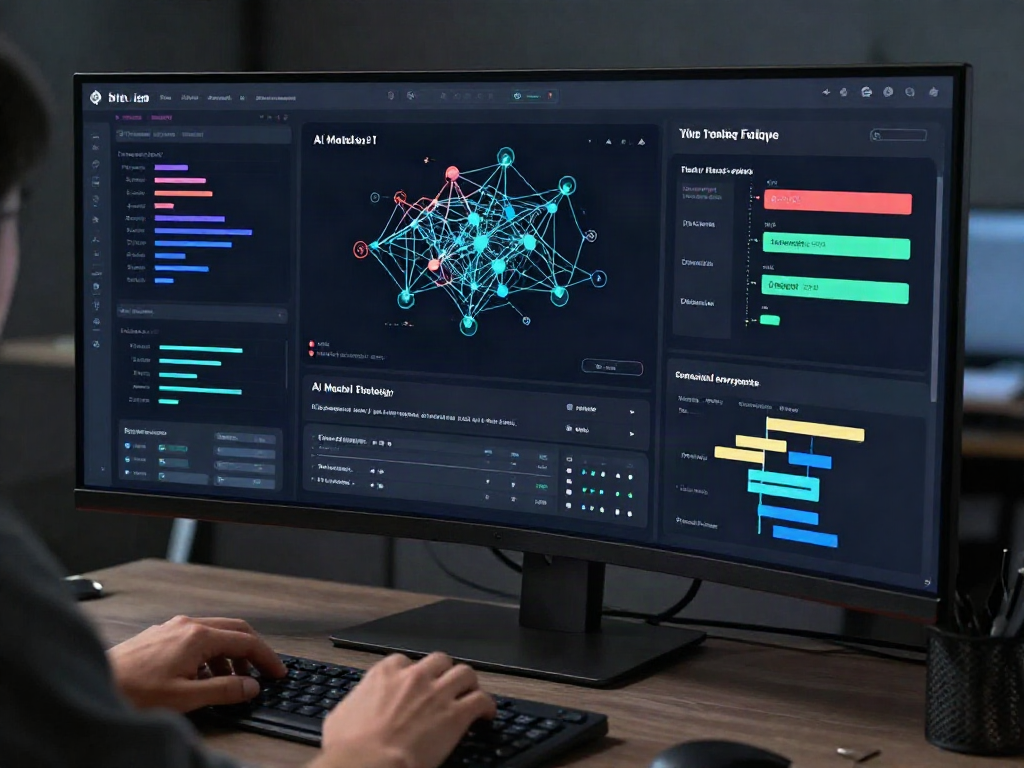
That change matters because nuclear sites produce more data than an operator can review at once. A robot moving through a plant can record images, radiation readings, temperature, and location. AI can sort those records by place or flag a change between two inspections.
The software still needs a clear task. “Inspect this pipe run and mark changes” gives it a target that can be checked. A vague instruction such as “find anything dangerous” leaves too much room for missed items and false alarms.
AI can also help with route planning. A wheeled or tracked robot may build a map from cameras and LiDAR, a sensor that measures distance with light. If a passage is blocked, the system can suggest another route, but an operator should approve movement near cables, valves, or damaged structures.
Where the benefits show up
Inspection is the clearest use. The robot can repeat the same path, point its camera at the same equipment, and compare new images with earlier records. That gives engineers a better way to spot corrosion, cracks, leaks, or loose parts than a single visit viewed from one angle.
Radiation work brings a second use. A robot can carry a radiation sensor into an area and build a reading map while it moves. AI can group high readings by location and help an operator decide where another pass is needed. The robot does not make the radiation safe; it helps keep people farther away while they gather information.
Remote handling is harder. An arm may need to turn a valve, move debris, or connect a tool while cameras provide an imperfect view. AI can help predict the arm’s movement or warn about a likely collision, but small errors can damage equipment or trap the robot.
A nuclear robot can make a wrong move before an operator sees the cause on a screen. The task, site, operator role, test date, and result belong beside any claim about autonomy. A report from Robot24.com can keep those facts with the machine before the next section explains why nuclear sites limit autonomy.
Why nuclear sites limit autonomy
Nuclear work has conditions that punish weak assumptions. Dust can cover lenses. Metal surfaces can confuse cameras. Radiation can affect electronics, and a blocked route can leave a robot unable to return. A system trained on clean images may work poorly when smoke, darkness, water, or damaged equipment changes the scene.
The operator also needs to know why the software made a suggestion. A label such as “possible leak” is not enough on its own. The system should show the image area, sensor reading, location, and confidence level so a person can check the claim.
Safety rules add another limit. A robot may plan a path without having permission to move there. The control system needs physical stops, clear operating boundaries, and a way to return control to a person. AI can support the decision; it should not quietly make a high-consequence decision that nobody can review.
I'd treat AI as a decision aid until a site has tested the full robot, sensor set, software, and recovery plan under its own conditions.
A practical deployment checklist
Before buying or approving an AI-assisted nuclear robot, check these points:
- Define the task: write the inspection or handling job in terms that produce a pass or fail result.
- Test the sensors: use the lighting, dust, water, shielding, and radiation conditions found at the work site.
- Record the handoff: state which actions the software may suggest and which actions need human approval.
- Plan recovery: test how the team retrieves the robot after a lost link, blocked route, low battery, or sensor fault.
- Keep the data: store images, sensor readings, maps, software versions, and operator decisions for later review.
That record matters because a working system must be checked after software changes, hardware repairs, and new site conditions. A model that performs well in one building may need fresh tests in another.
The next useful measure is not how naturally the robot talks or how polished its dashboard looks. It is how often the system finds the right inspection target, how often it raises a false alarm, and whether the robot can return safely when the plan fails.